
ISO Standards: Powering a safer, smarter and more sustainable world
—Interview with ISO President Dr. Sung Hwan Cho
ISO标准让世界变得更安全、更智慧、更可持续——专访ISO主席 曹诚焕博士
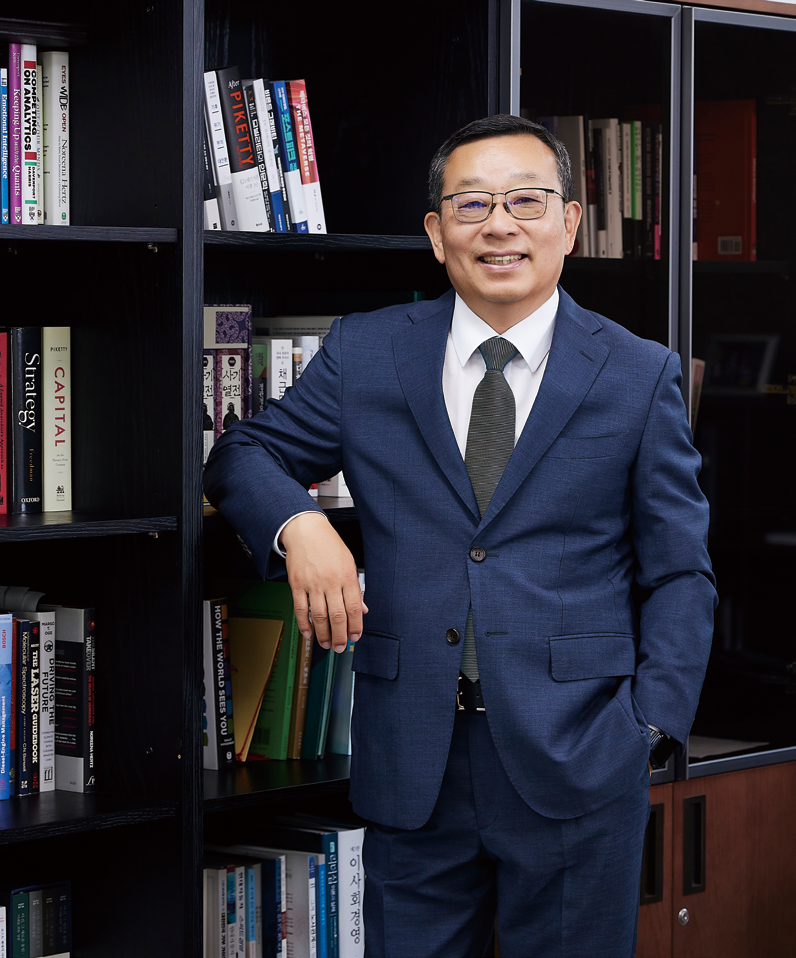
China Standardization: Thank you for accepting our interview. With over 30 years of experience in the automotive industry, you have held roles ranging from research engineer to top executive, including President and CEO of Hyundai Mobis—the world’s sixth-largest auto parts supplier. Based on your extensive industry background, how do you perceive the role and importance of international standards? How has this experience shaped your approach and priorities as ISO President?
Dr. Sung Hwan Cho: I have been very fortunate in my professional career to witness first-hand the extraordinary power of standards and their incredible potential to transform lives for the better. International Standards, though often unheralded and invisible, are critical for trade, exports and cross-border commerce. They offer an entry point to global markets, helping to establish trust and confidence in goods and services and ultimately driving social and economic growth.
In a time of growing regulatory fragmentation, International Standards provide a common language and a consistent framework that is recognized worldwide, enabling technical interoperability across borders. This is particularly relevant for the global automotive industry, which must comply with various regulations and local certification requirements in a wide range of target markets.
Safety and quality are top priorities in automotive development. Meeting minimum quality thresholds requires adherence to established standards, such as those developed by ISO, and regulatory frameworks. The name of ISO commands trust and respect across the globe due to our consensus-based, multi-stakeholder standards development process, which gives traders and consumers alike confidence in the quality and safety of products.
However, we can maintain our reputation only if we listen to our audience – standards users across different sectors of industry and society. In today’s rapidly evolving socio-economic landscape, it is vital that we develop standards which are more market-relevant and customer-focused. While ISO remains grounded in strong institutional principles and traditions, it can nevertheless benefit from the efficiency and speed of private sector practices.
With technology advancing at an unprecedented pace, it is essential that ISO adopts more agile and responsive standardization models to better serve the market. Emphasis should be placed on timeliness, market needs, customer orientation, environmental, social and governance (ESG) considerations and target-driven delivery.
To stay relevant and continue driving quality, safety and innovation, we must embrace flexibility and actively listen to our end users. By adapting to their needs and remaining open to change, we can ensure that our standards continue to meet the highest expectations and foster global progress.
At the start of your tenure as ISO President, you outlined five key pillars of action that you intended to focus on during your presidency. Now that more than a year has passed, what progress or notable achievements have been made in advancing these priorities?
The past year has seen many notable milestones for ISO in relation to these pillars. These include the creation of a mechanism to respond to global crises, the increased use of digital learning solutions in delivering ISO capacity-building activities and expanded opportunities for developing countries to participate in our standards development system. Development support for emerging economies has also been boosted, aided by the backing of ISO’s partners, such as the Global Environmental Facility (GEF), the National Metrology Institute of Germany (PTB) and the Swedish International Development Cooperation Agency (Sida), and some ISO members, including KATS, ISO’s member for the Republic of Korea.
We have made significant strides in raising ISO’s profile and strengthening its presence on the global stage. ISO leadership has participated in panels, discussions and workshops at events as perse as the World Economic Forum in Davos, the AI for Good Global Summit in Geneva and the Paris 2024 Olympic Games.
ISO’s voice was heard at COP29 in Baku, Azerbaijan, where we co-hosted the first-ever Standards Pavilion, a vibrant hub showcasing how standards play a crucial role in turning climate commitments into measurable actions. Recently, our Secretary-General, Sergio Mujica, joined World Trade Organization (WTO) Director General Dr. Ngozi Okonjo-Iwaela to highlight the key role of International Standards in global trade during the WTO’s 30th anniversary celebrations.
However, we cannot achieve success alone. Fostering strategic partnerships – central to our Strategy 2030 – allows us to share expertise and break down silos to create harmonization and alignment across the standards ecosystem. This was demonstrated last year by our partnership with the United Nations Development Programme (UNDP), which resulted in the ISO/UNDP Guidelines for the SDGs. Launched at the ISO Annual Meeting in September, the guidelines were jointly developed to accelerate progress towards achieving the UN Sustainable Development Goals.
Working with such a globally recognized strategic partner as UNDP ensures that sustainability efforts are harmonized, transparent and impactful.
These collaborative efforts will culminate in December when, alongside our World Standards Cooperation partners, the International Electrotechnical Commission (IEC) and the International Telecommunication Union (ITU), ISO will lead the groundbreaking 2025 International AI Standards Summit in Seoul. This initiative responds to the UN’s call to enhance AI governance through International Standards, following the adoption of the Global Digital Compact last year. Given China’s recent leaps forward in AI development, SAC’s participation will be particularly significant.

With the rapid rise of technologies like artificial intelligence, how is ISO adapting to support and guide these developments through standardization? Could you share some of the recent advancements ISO has made in the digitalization of standards?
With governments worldwide adopting different approaches to AI governance and regulation, there is an urgent need for global benchmarks to ensure security and interoperability across markets. International Standards developed by the ISO/IEC technical community on AI can fill this gap. These trusted tools help businesses and policymakers establish responsible, ethical AI governance in line with good business conduct.
Standards such as our flagship ISO/IEC 42001 support AI governance by providing guidance on the responsible management and implementation of AI systems within organizations. By focusing on interoperability, transparency and safety, International Standards create a universal language around AI that promotes trust.
Last year, the world took a historic step towards global governance of digital technology and AI with the launch of the UN’s Global Digital Compact. The Compact underscores the need for increased collaboration between standards development organizations to promote the development and adoption of interoperable AI standards that uphold safety, reliability, sustainability and human rights. ISO fully supports this initiative and is working with our fellow standards development organizations IEC and ITU, our members, regional standards bodies and other strategic partners to advance it.
In addition to developing standards on AI, we are also embracing the technology to improve our systems and revolutionize the standards development process.
The Online Standards Development (OSD) platform, a joint endeavour with our partner IEC, is designed to support the creation of standards online and drive the digital evolution of our two organizations. With the recent publication of the first standard completely developed using the tool – encompassing the authoring, commenting and editing stages – the OSD is now the default platform for the development of ISO standards.
One of my own proposals, the new ISO Companion project, is designed for the ISO technical community to address their questions around standards development through an AI-powered chat-like experience. With a pilot programme currently underway, the ultimate goal is to apply AI across ISO’s entire value chain, increasing efficiency and delivering measurable value in the coming years.
The delivery of the tool in just 3 months shows that ISO/CS is at the forefront of AI transformation – not only in our standards but also in developing innovative, fast and efficient products to serve our members’ needs.
From your perspective, what are the key trends shaping the future of international standardization? How should ISO prepare to address emerging global challenges?
The effects of climate change, energy shortages and loss of biopersity affect us all. Addressing these global challenges requires urgent and meaningful collaboration, innovation and an international approach.
ISO, through the standards we develop, has a crucial role to play in steering the world towards a better future. We have demonstrated that we can be agile and responsive to market needs, for example by developing guidelines for organizations on implementing ESG practices and contributing to the UN Sustainable Development Goals.
The landscape of International Standards is rapidly evolving, with several recent advancements that hold significant promise for enhancing sustainability, innovation and inclusivity. The creation of ISO and IEC’s Joint Technical Committee on Quantum Technologies underscores our dedication to exploring emerging technologies. We are shaping the future of the digital age through our work in bio-digital convergence and the metaverse, and have recently established a new subcommittee on brain–computer interfaces.
Meanwhile, the first standards from ISO’s technical committee on the circular economy are helping all types of organizations maximize their contribution to sustainable development. ISO has also teamed up with our WSC partners, IEC and ITU, in the AI and Multimedia Authenticity Standards Collaboration, launched last year to develop global standards for AI watermarking, multimedia authenticity and deepfake detection technologies. This initiative aims to address the serious challenges posed by the rapid advancements in AI and generative AI technologies.
ISO will be helping to shape the agenda on AI at two prominent standards-related AI events in the coming months: standards day at AI for Good in Geneva in July and the 2025 International AI Standards Summit in December.
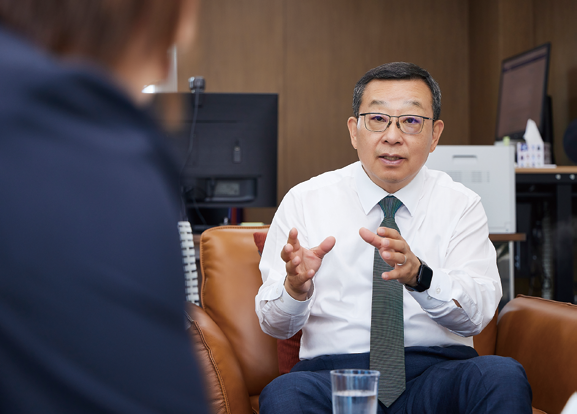
Encouraging broader participation in standardization efforts is crucial. What steps has ISO taken to involve experts from small and medium-sized enterprises (SMEs), as well as young professionals, in the development of international standards?
At ISO, we believe in actively listening to all voices to ensure that our standards meet global needs. We are committed to advancing inclusivity and persity within the ISO system. Our consensus-based standards development process, which includes a wide range of stakeholders from all sectors, ensures that all opinions are considered – regardless of age or background.
SMEs account for the vast majority of businesses worldwide but often face unique challenges due to limited funds or resources. ISO recognizes this and has produced guidance specifically aimed at supporting SME involvement in standards development.
Input from the younger generation, a powerful driver of innovation in China, is also crucial. Engaging young professionals in standards development brings three key benefits: new perspectives, ideas and skillsets for the technical community; continuity in technical committees; and increased persity within the ISO community, giving young people a presence in fields traditionally dominated by older generations.
However, it is not enough to simply talk about this involvement – research suggests that many young people are unfamiliar with standards and standardization in general. This raises questions over how the next generation of technical experts will engage with the standards development process. ISO and its members are making every effort to actively involve and empower young professionals, establishing programmes to raise their awareness of standards.
These include a dedicated project to support our members in attracting, engaging and retaining young professionals in the standards development process. In addition, ISO annually awards a grant to a postgraduate student or team to conduct research related to evaluating the impacts of International Standards, based on a specific theme.
Finally, ISO’s Next Generation Award, sponsored by former ISO President, Dr. Zhang Xiaogang from China, celebrates and encourages the development of promising young professionals who promote sustainable development. These awardees bring enthusiasm, creativity and fresh ideas to the standardization industry.
Through these initiatives, we aim to create an environment in which young people can thrive, driving the standards system towards a more sustainable, inclusive and resilient future.
You have participated in several important meetings and events hosted by China over the past two years. How do you assess China’s role and contributions to ISO’s international standardization work? What suggestions do you have for enhancing collaboration between ISO and the National Standardization Administration of China (SAC) in the future?
It has been a great privilege for me to visit China as ISO President on several occasions and meet colleagues from SAC to discuss their crucial role in the development of International Standards. China is a leader in international standards development and a valued member of the ISO family. SAC heads around 90 ISO technical committees, dealing with important topics such as plastics, shipping and marine technology, and education and learning services. Overall, it participates in around 780 technical committees and sub-committees across various sectors, including ores and metals, chemicals and distribution of goods.
I welcome and encourage SAC’s increased participation in ISO technical activities, especially those linked to China’s strategic priorities for economic and social development. International Standards, as powerful enablers of trade, are crucial in facilitating China’s participation in regional and international markets. SAC’s contribution to their development is therefore extremely important in the national context.
On a global scale, SAC can play a vital role in developing standards that address current environmental and sustainability challenges, such as renewable energy, greenhouse gas emissions and the circular economy. SAC also has the expertise to shape transformative technologies and the digital transformation by contributing to standards on AI, quantum technologies and cybersecurity.
The input of Chinese experts and stakeholders from across all sectors helps ensure that ISO standards meet market needs and reflect perse user experiences, fostering buy-in and trust across borders. The relationship between our two organizations is mutually beneficial.
SAC also makes notable contributions to the governance and technical activities of our organization through membership of the ISO Council and the Technical Management Board (TMB). Its continued participation and engagement are essential in shaping ISO’s strategic direction.
Finally, I applaud SAC’s efforts towards implementing the ISO Strategy 2030, through active participation in international standardization activities, research into the benefits of standards, enforcing standard copyright protection and promoting capacity building. SAC’s collaboration and drive are vital in helping achieve ISO’s vision of making people’s lives easier, safer and better.
Interviewed by Cao Xinxin (Diana) 采访/曹欣欣
About Sung Hwan Cho:
Sung Hwan Cho has been elected ISO President for a two-year term starting from January 1, 2024 and served as President-elect in 2023. Dr. Cho brings 30 years of experience from the automotive industry as top executive and research engineer. As the Advisor of Hyundai Mobis, he previously held the position of President and CEO for the company, which is the 6th largest auto parts supplier of the world.
Prior to taking up his role as President and CEO of Hyundai Mobis, he served as Deputy R&D head, Executive Vice President of R&D Planning and Coordination and President of Hyundai America Technical Center with Hyundai Motor Company. He also was the CEO of Hyundai Autron, an automotive semiconductor and software affiliate of Hyundai Motor Group.
Dr. Cho has accumulated extensive expertise in technology and related standards through his previous roles such as engineering manager. He also serves as Chairman of the Korea Automated Vehicle Standardization Forum and Council Board member in the Korean Standards Committee. He is also an elected member of the prestigious National Academy of Engineering of Korea, and holds the position of Endowed-Chair Professor at Sogang University, Seoul, Republic of Korea.
Dr. Cho holds a Ph.D in Mechanical Engineering from Stanford University, CA, USA and has a bachelor’s and master’s degree from Seoul National University, Seoul, Republic of Korea.
