
Building on collaboration to create a smart future—Interview with IEC President Mr. Jo Cops
以协作为基础 创造智慧未来——专访IEC主席 乔·科普斯
Last year, China Standardization Press interviewed Mr. Jo Cops, IEC President, during the IEC Global Impact Fund Forum in Nanjing city, East China’s Jiangsu province. He talked about IEC’s contribution to an all-electric, connected, and sustainable world, and further expounded on the vision and practice of the newly established IEC Global Impact Fund.
This year, we are glad to meet Mr. Jo Cops again in Nanjing. He has brought the latest progress of IEC GIF, and shared his opinions on standardization work.
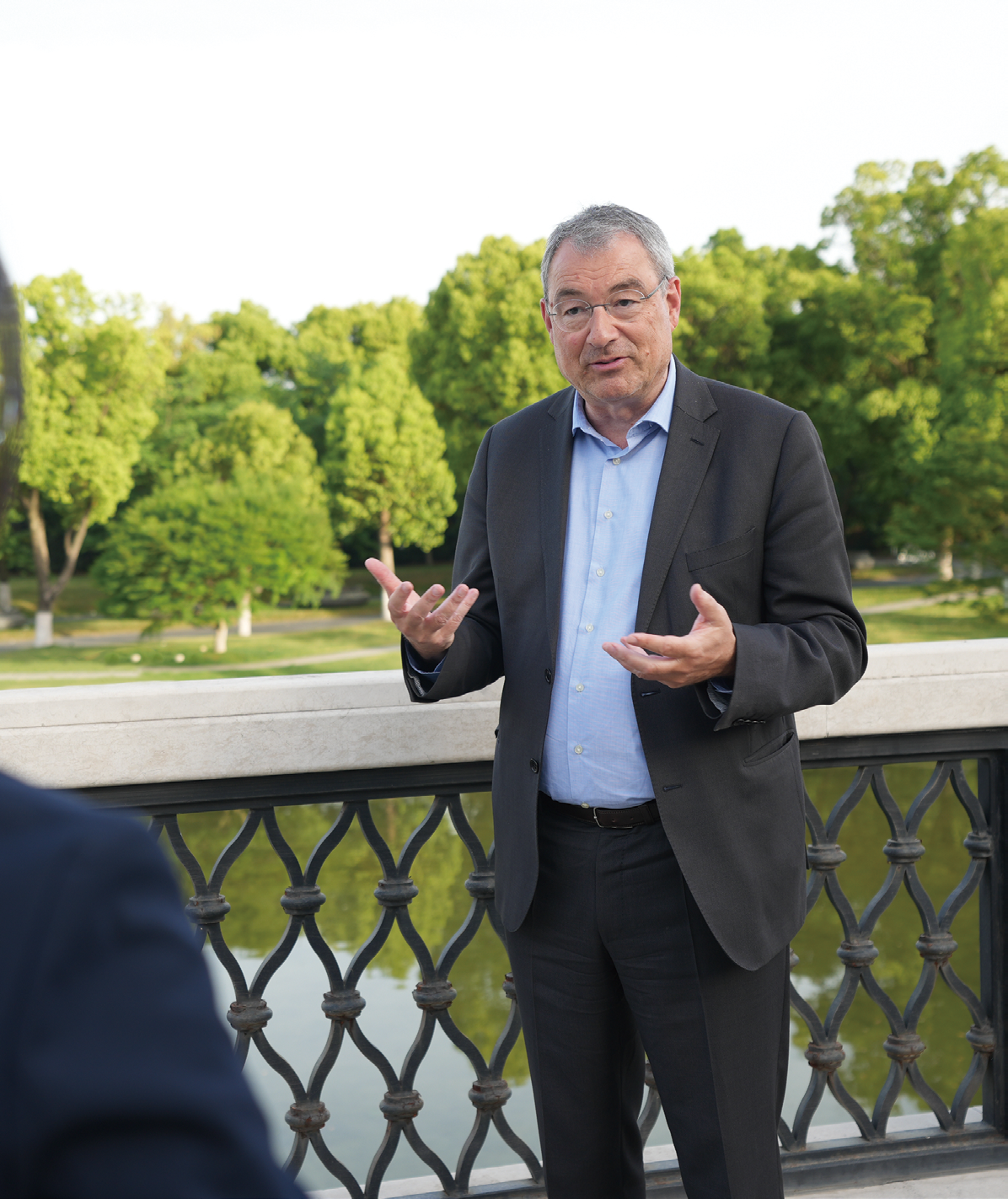
China Standardization: During the IEC Global Impact Fund Forum last year, you talked about the newly launched IEC GIF. Is there any new progress?
Mr. Jo Cops: The IEC Global Impact Fund has successfully launched two projects aimed at bringing the benefits of IEC standards to society through enabling clean, sustainable and safe energy access to communities in need.
We could provide electricity locally for communities that are too far away from the grid. It is economically not viable to connect them to the grid and cost too much money. So we came up with an alternative fully based on IEC standards and conformity assessment.
The IEC GIF formed several partnerships with organizations that support its mission and can help propel progress through attracting funding, awareness and joint activities. This includes the Korean Agency for Technology and Standards (KATS) as the first financing partner for the Fund. Under the agreement, KATS, which hosts the IEC National Committee for Korea, is contributing CHF 200,000 (about USD 241,580) per year.
The first project is to empower Kenyan communities to create a better cleaner future. Under the project, the Differ Community Power (DCP), an international provider of solar energy services to communities, is determining the feasibility of using second-life lithium batteries to rehabilitate solar photovoltaic (PV) installations at critical locations such as schools and healthcare facilities in Kenya, with the help of international standards. If the approach is proven viable, it is expected to extend to other existing solar PV installations across sub-Saharan Africa, thus improving potentially thousands of lives through enabling reliable, clean sources of electricity.
I was there last year and I could see firsthand how these things were going. I had heard the stories that when women came to the hospital in the middle of the night where there were no lights, they had to give birth while holding the torch. That had gone straight to my heart. So we tried to help those communities by providing electricity.
A total of 9 sites (7 schools and 2 health facilities) were chosen to benefit from the project and inform IEC’s work. Installations have been started, and are expected to be completed in June this year. The significant impact of the project lies in the communities. It enables families to receive necessary vaccines, medications and more appropriate healthcare, nurses to charge their phones locally without having to drive for miles, teachers to be able to use learning equipment such as tablets and projectors, and the wider community will be able to benefit from the lighting and power to charge their phones too.
That is a very successful project that we want to scale up in the coming months.
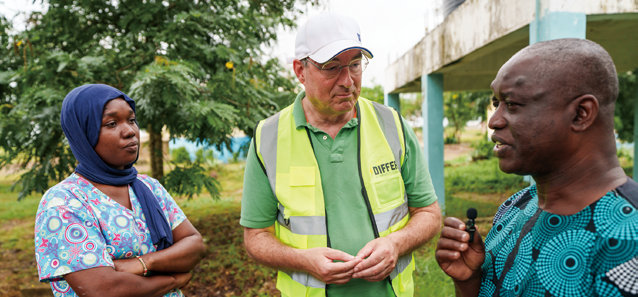
Jo Cops visits Kenya to investigate the first project of the IEC Global Impact Fund.
The second project was launched last year and an implementing partner has just been selected. It is aimed at supporting an SME-led project to bring clean cooking solutions to communities, given that around 2.1 billion people—roughly a third of the global population—still rely heavily on solid fuels like wood, charcoal and animal dung for cooking. These methods are not only inefficient but also dangerous. The need for cleaner, more sustainable cooking solutions is clear and urgent.
In that case, we are trying together with other organizations like the Sustainable Energy for All, which is an organization hosted by the United Nations Office for Project Services (UNOPS), with a global mandate to accelerate progress on the energy transition in developing countries. We try to bring eCooking (electric cooking) to the communities.
Can you further explain eCooking?
It is about making the supply of electricity for clean cooking available to rural or economically disadvantaged residents. They tend to rely on fuels such as wood and animal dung for cooking, and the gathering of fuels is mostly undertaken by women and even children.
The fuel-based cooking is very polluting and also not very efficient. The emergence of solar home systems sized for cooking, mini-grids designed to support cooking loads, and household energy storage to buffer unreliable grid supply, has enabled eCooking to become a much more equitable solution to the clean cooking challenge. It can facilitate energy production, and make more time available for the kids to study, which is a project beneficial to those communities.
Emerging technologies such as AI, big data, and cloud computing are prospering and blending with traditional industries. How is IEC responding to this ever-changing world and technological innovation?
IEC is already involved in those new technologies. We are tracking new technologies all the time. We try to see what is going on in the market and we try to base our work on what is happening there. For example, we are involved in the ISO/IEC JTC 1/SC 42 on AI, and we have other subcommittees focusing on cybersecurity as well. We also have the IEC Market Strategy Board, which is having its annual meeting here in Nanjing, to keep a close eye on the technological trends.
While the IEC already develops standards and conformity assessment solutions for the digital economy, including for emerging technologies such as artificial intelligence and quantum, a paradigm shift is underway. One big development we are seeing and expecting very soon is the smart future. The smart future consisting of smart standardization and smart conformity assessment is the next big step.
The IEC is currently developing smart products and services that will make it possible for users to choose not only entire IEC standards but also paragraphs or even smaller information units from different publications, and to combine them in a way that addresses specific needs. We are currently piloting a white label app on this purpose. By inserting code based on PDF documents, the work flow will become much more automated. That is how we visualize for ourselves the smart future. Furthermore, the IEC Board is committed to investing a lot in the smart future.
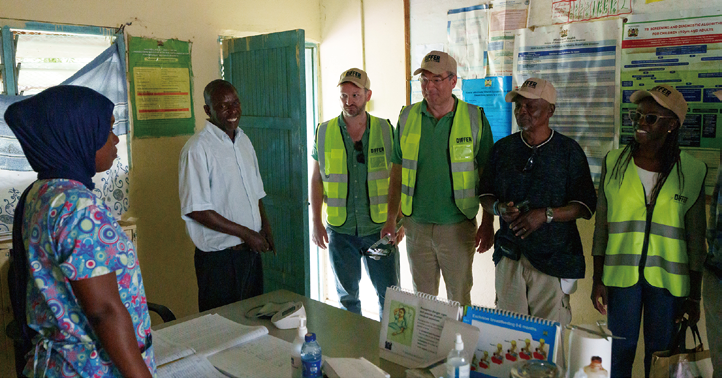
Jo Cops visits Kenya to investigate the first project of the IEC Global Impact Fund.
What has IEC done to realize global prosperity?
Our work supports global prosperity by helping to remove barriers to trade. Under the World Trade Organization’s Technical Barriers to Trade (TBT) Agreement, WTO members commit to using international standards as the basis for their national standards, mandatory technical regulations and testing and certification practices. Global value chains can only function efficiently when all participating economies follow the same harmonized, globally agreed rules, which are embedded in international standards.
Starting from working in the industry, you have expanded your career at national, regional, and international level, which is especially valuable to standardization. Please share your opinions on how standardization work at national and international level interact with each other.
The first thing to remember is that standards usually start at the country level. Most countries have their own national standards-making bodies and many of these host IEC National Committees. Under the WTO rules, governments are required to base their national regulations on standards produced by organizations like IEC and ISO. Driven in part by these rules, and further accelerated by the broader forces of globalization, national and regional standards bodies are increasingly adopting or aligning with international standards wherever feasible.
What achievements have been made during your IEC presidency? What advice do you have for Mr. James Matthews, the President-Elect?
We have achieved a lot during my presidency, also thanks to the very solid foundations laid down by my predecessor, Dr. Shu Yinbiao, the 36th IEC President. Three years is not very long, but during this time we have completed important work on the long-term sustainability of the IEC, created the IEC GIF, and developed smart products and services to bring IEC standards and conformity assessment into the digital age.
I believe I have left James a platform that he can build on. As mentioned previously, three years is not very long. Our role is really to ensure the passing of the baton is as smooth as possible and it helps that James’ vision and mine are very much aligned. I have a tremendous respect for Jim and his abilities. The IEC will be in very capable hands.
采访/方洛凡 (Interviewed by Fang Luofan)
About Mr. Jo Cops:
Mr. Jo Cops became IEC President on January 1, 2023, for a three-year term. Prior to that, he served as Treasurer of IEC from 2018 to 2022. He led the Belgian Electrotechnical Committee (CEB-BEC) as the Secretary-General from 2012 to August 2021.
Mr. Cops has a master’s degree in engineering and has had a distinguished career in industry. He was the Director of Industry Relations at Niko, a European leader in smart home solutions. He began his career with Sony Belgium and subsequently held various management positions within Sony Europe, followed by senior positions at Telenet (Liberty Global) and Alpha Technologies Europe.
