
Standards and certifications help enterprises improve product quality, address AI challenges and go global in compliance
—Interview with Dr. Tatiana Schmollack-Tarasova, Managing Director, BSI Greater China
标准和认证助力企业提升产品质量,应对AI挑战和合规出海——专访英国标准协会(BSI)大中华区董事总经理 石慕澜
Photo: BSI
China Standardization: Thank you for joining our interview. Could you walk us through BSI’s core business layout and strategic priorities in recent years?
Dr. Tatiana Schmollack-Tarasova: It is a great opportunity for me to speak on behalf of BSI. I would probably start with a little bit of a step into our history, just a short reminder of who we are and what we do. BSI stands for British Standards Institution. We are a relatively old organization. This year we celebrate the 125th anniversary, so you can imagine this is a big milestone for our organization. Everything that we do and what we are actually is a rotation around our purpose.
Unlike many other organizations that are driven by profits and shareholder interests, BSI is driven by the purpose of creating impacts for a fair society and a more sustainable world. It may sound like big statements, but this is what we always think about when we make strategic decisions or decide on our business future. It is really helpful, because it brings us back to why we exist, what we are going to do, and reflecting on the purpose really helps in day-to-day decisions.
Nowadays, disruptive emerging technologies especially AI, global digital transformation, and the net-zero transition are reshaping the world. How has BSI adjusted its overall strategy to tackle these challenges and empower corporate upgrading?
Dr. Tatiana Schmollack-Tarasova: If we reflect on how this brings us back to our purpose again, the answer is relatively simple and straightforward, because no matter the carbon challenges, climate challenges, or net zero ambition, all of these perfectly align with our purpose to create impact. That means that we will adjust our focus particularly around sustainability. This is one of the strategic directions that BSI has taken in recent years. We follow that really through, because carbon and climate are among the largest challenges in the world, and as an organization, we want to make our contributions and create impact. This is why it brings us straightforwardly to the direction of supporting businesses and society with services which drive sustainability. This is one direction of BSI Group, but also for BSI here in China. For example, as one of the key contributions, BSI is leading the global development of the world’s first Net Zero Standard ISO 14060. This has reached a public consultation stage by now.
Digitalization and AI are another huge challenge in front of us in the whole world, which will impact our lives and the lives of our children. Automatically, it links back to our purpose, because as an organization, we want to make an impact for a fair society and a more sustainable world. We need to be in the digital space, and we want to support the world in solving those biggest challenges. That is why the second pillar of our strategy is digital trust. I think these two directions on the Group level define most of the activities and the services we provide in different markets, including China.
Photo: BSI
What are BSI’s key business priorities and market layouts for the Greater China region this year?
Dr. Tatiana Schmollack-Tarasova: First of all, I must say that it is a huge learning process for me personally as a Managing Director in China. I see this as a highlight of my professional career. I also see this as a huge opportunity for BSI to learn from this market.
Before joining the Greater China region as a managing director, I managed the Northern Europe cluster of BSI, covering the German-speaking markets in Germany, Switzerland, Austria, and other countries like Belgium, the Netherlands, and some of the Nordic countries.
Obviously, these are very different markets and very different dynamics. That is why I mentioned that it is learning for me in my role, and I bring this learning back into the Group, into the corporate organization, so that the broader parts of BSI can understand what happens in this market. This is a bridge, linking what is happening here with the rest of BSI.
The second point is to execute our Group strategy in Greater China. Sustainability and digital trust are our top priority directions. So my job here in Greater China is to work together with the markets and to provide them with services that are relevant for this market in these two domains—sustainability and digital trust.
In your view, what are the biggest differences between the Greater China region market and the European market?
Dr. Tatiana Schmollack-Tarasova: If I speak from the BSI perspective here, I always try to look more at what we share in common, because standards by nature are a common language. They unite—they don’t pide—and that is their destination and purpose. From that perspective, I think that each market needs standards, and the more we cooperate and work together in the area of international standards, the fewer differences we will see and the more synergies we can achieve. That is the whole idea of international standards.
What is the difference? Of course, there are cultural differences and business differences. There is no bad or good, right or wrong. It is just sometimes different perceptions and different expectations. To illustrate my point of view, the large difference in China here is that everything is very fast. We call it China Speed. Everything must happen within 24 hours. If my Chinese team does not respond to a client in a short time, this is not considered okay here, but it will be considered fine in the European market. So the communication, style, expectations, and perceptions are very different.
The perception of standards is also quite different, because in the European market, standards have existed for a very long time. Take BSI as an example. It has a history of 125 years. In the world of standards, that is a long time. Understanding that standards are necessary, and that appreciation and respect are normal, is deeply engraved into business life as well as into the perception of the end users.
For example, I lived in Germany before coming to China. As an end user, if I go shopping in a retail store, a lot of products have some kind of mark of trust on them, and the end user will look at them and they will check: it was tested. It has some confirmation of the claim that the product is making. This is culturally embedded into the system. In Germany, you may see the GS (safety tested) mark on a product, which means that it is safety approved. That makes the end user feel better, because they will think the third party tested this product and they have certified it. As an end user, I can feel safe because the risk is shared.
In China, standards are largely adopted from international standards. Now we see a lot of new technologies and standards being developed here; at the same time, they are perceived more as a sort of market access tool. So I think the biggest difference is perception and historical duration of the existing standards. I don’t think we are there yet, but more and more understanding is arriving.
Photo: BSI
Since you took office as Managing Director of BSI Greater China, what core measures and strategic layouts have you rolled out to further strengthen BSI’s local brand influence, expand market penetration, and drive sustainable business growth in China?
Dr. Tatiana Schmollack-Tarasova: First of all, I must say that I absolutely admire my colleagues at BSI in Greater China, and I also admire the professionalism and strength of the stakeholders who I am working with in China, such as all kinds of professional associations, our clients, and stakeholders in the authorities. When I meet them, I can sense and appreciate the higher level of education, professionalism, and interest in cooperating. That makes my work easier. Because if you show genuine interest and willingness to cooperate, it makes things faster and easier for me. I truly appreciate that.
In terms of the specific measures that I have taken, my job here is to execute our Group’s strategy in line with our strategic direction, which is creating positive impacts for a fairer society and a sustainable world. It means that alignment to the strategic direction towards the products or services we provide in the sustainability domain as well as in the digital trust domain is one of my top priorities.
From that perspective, we have launched a few new offerings that are particularly relevant for the market in China. These are not always mandatory certifications that Chinese companies would need for exporting. For example, if you want to go to Europe, you need a certificate, and then they come to us to get certified. What we have started to offer more proactively is support in building the brand for Chinese companies going overseas. Strong brands need strong trust, trust is built through assurance.
So we actually created offerings that are aimed at the new technologies where standards and certification schemes may not yet exist. We have created two types of services here. For example, the Data Center Mark of Trust, which is a voluntary scheme for service providers in China and outside of China, focused on the data center building, facilities, energy efficiency and services around data centers. It is a complex set of certifications including several modules that will cover aspects such as energy savings, water security, cybersecurity, and information security. This is really a start and triggers a lot of interest from the Chinese globalizers. That is what I am working on right now with my team.
Another area we are focusing on is the promotion of services in AI. For example, the AI Mark of Trust focuses mainly on AI governance. The newly launched certification scheme links to the EU AI Act. And the international standard ISO/IEC 42001:2023, AI management systems certification, supports the amazing Chinese AI technology to gain international trust.
BSI serves enterprises of all sizes and industries worldwide. From your extensive global experience, what are the key differences in standardization awareness, implementation capabilities, and compliance practices between Chinese enterprises and their European or global peers? What targeted suggestions would you offer to Chinese companies to better adopt, implement, and align with international standards?
Dr. Tatiana Schmollack-Tarasova: I would like to focus more on what we have in common rather than what is different between us. Many Chinese organizations go through a very similar journey that international organizations went through when they were expanding globally. I think a few points could stand out in this area. First, for a very long time, Chinese companies were mainly focusing on market access, producing products in China, getting products tested and certified, and exporting them overseas.
But now the development of Chinese manufacturing is at a very different stage. I call them “Chinese globalizers.” What is happening now? With all these overseas movements, Chinese enterprises are going out of China. They build subsidiaries everywhere outside of China. I just read some statistics. Every year, more than 50,000 subsidiaries of Chinese companies are being opened outside of China. I think this is a huge number. In that movement, sometimes those organizations may not be fully aware of what to expect and how to deal with all those overseas requirements. I think that is the learning process.
I mentioned that Chinese organizations have a very strong appetite for speed. However, when you go overseas, it is a process that takes time, so you need a little bit of patience. Maybe sometimes it is necessary to understand the regulations, the requirements, and the culture in the destination market, so that you can collaborate and cooperate effectively.
It is more a question of perception, but not really a question of quality or maturity. From what I see, the Chinese companies and organizations I work with are very professional and mature. Many of them are very mature and get that done successfully. It is just taking perhaps a bit more time than they would like it to take.
Photo: BSI
With over 15 years of deep expertise in the global Testing, Inspection, and Certification (TIC) industry, you have witnessed widespread corporate misunderstandings regarding standards and certification. What are the most typical misconceptions you have observed?
Dr. Tatiana Schmollack-Tarasova: I think it is not only for Chinese companies, but in general, there is a certain misconception about standards. I would say there are three generic misconceptions about standards.
First, sometimes standards are perceived as a blocker or a barrier to innovation. Because you want to do things fast, and suddenly there is a standard in front of you which you have to follow. Sometimes it is perceived as a barrier. But it is actually not, because the standards will help you scale. If you follow international standards in various markets, you can actually save a lot of money and energy, as you don’t do it in every market differently. It is definitely not a blocker, but an enabler.
The second misconception is quite common. Sometimes organizations see standards and certification for the international market as a one-off exercise—I do it once and then it is done. This is actually wrong, because the whole idea of standards and certification is scaling, repetition, and improvement. It is a process, a journey; you continuously improve and prove. We expect companies to continuously learn from that and then get better and better. That is the whole idea of standards—continuous improvement. It is written down in the foundation of principles of standardization.
The third misconception that I sometimes face when working with Chinese organizations is that there is confusion between regulation and certification. It is a kind of mixed understanding of the two things.
Let’s take AI and the European market as an example. We all know that in the European market, there is very strict regulation, the EU AI Act. In fact, it is a law. It is the regulatory framework, which is mandatory. It must be fulfilled. If you look at the process, what kind of certification can support companies to fulfill that regulation? There is one, ISO/IEC 42001:2023, AI management system. But it is not a law, but a certification scheme against international standards of AI management systems. However, there is a link between the certification scheme and the law. Even though the standard is voluntary and not mandatory, it speaks to certain clauses or articles of the law. For example, it will speak to Article 17 on quality in the Law or to Article 9 on risk management. It means that organizations that voluntarily fulfill the certification against ISO/IEC 42001 will have a better chance of being prepared for the EU AI Act, as simple as that.
To give you another example, I am exposed quite a lot now to the beautiful robots in China. Sometimes those entrepreneurs come to me and say, “Can I get the CE marking for my robots to ship them to Europe?” This case is not as simple as that. Around the CE marking, there are many more requirements, including the EU AI Act, the laws on safety, cybersecurity, information security, and data privacy, as well as specific regulations depending on the intended use or application of the robot. Sometimes it is misunderstood or underestimated.
Do you think Chinese companies are improving in this aspect? Do they now have a better understanding of the standards or the difference between standards and regulations? What advice would you give to Chinese companies?
Dr. Tatiana Schmollack-Tarasova: As I mentioned, when we communicate with our clients and stakeholders in China, we can feel that their level of maturity is already very high, and the professionalism and knowledge of those people around standards and regulations are certainly already at a high level. Of course, it depends on the industry and the size of the organization. The bigger the organization, the more global they are, the more they know.
I would say let’s look at it as a learning curve. Because this whole idea of going global, if you translate it literally into English, is like a maritime term, “going to the sea.” If you think about it, going to the sea is like sailing. When you are sailing, you need to learn the ropes, learn how to navigate your boat, learn the ocean, and navigate in those stormy waters. That means if you think about it, the situation around regulations or market differences will not disappear. There will always be some differences and changes in this regulation and that regulation. So it is not a static point—say, let’s learn it now, and then we will know everything forever. Coming back to sailing, learning the ropes in this context means that the focus should be on building the capability to navigate; the capability to spot, interpret and integrate all those changing requirements, standards, and regulations when needed—such capability can be and should be built within the companies themselves. Be always prepared to navigate in those stormy waters when going overseas.
In the future, things like experience will matter less, because everything is changing so fast. So experience will actually depreciate, but the ability to adapt to new things and to learn new things is currently appreciating.
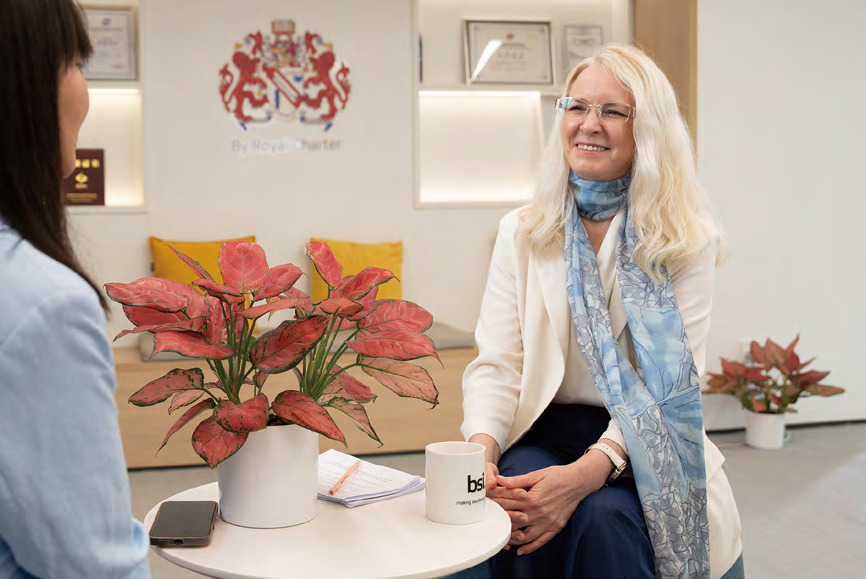
Photo: CSP
AI innovation and comprehensive digital transformation are bringing unprecedented changes to industries and society. How do you think these trends will reshape the global standardization and TIC industry in the next 3-5 years?
Dr. Tatiana Schmollack-Tarasova: I think technology will absolutely accelerate in every aspect of industry. What I see in China is quite amazing and fascinating; how specific and clear the policies and strategies are articulated.
For example, the National Certification and Accreditation Administration (CNCA), which is the governing body for the certification industry, announced new policies and new regulations for the certification industry at the end of last year. The policy makes it clear where the focus will be. It tells us that the focus is on quality, not on quantity anymore. They want to have value-added work behind the scenes. The policy articulates very specific measures, for example, limits on the number of days that auditors can be auditing and going into the field. It has given auditors more space to learn, to study, and to experiment with technology. It also gives clear direction on the use of digital tools.
I personally attended several workshops and seminars which were organized by the China Certification and Accreditation Association (CCAA), which is the association that maintains the qualification of auditors in China. There was a lot of sharing and case studies on how AI and automation can be used in practical processes and in certification work. I found it fascinating and a huge learning experience for me.
Back to your question, there will be big changes in the way we deliver our work. It will release human power to more experiments with AI and automation, but the focus will remain on continuous improvement. I am grateful to have the opportunity to learn all these things. When I attend those webinars and seminars, they are all in Chinese, but using AI technology, I manage to understand. That is really fantastic.
As a successful businesswoman with two children, what do you want to say to encourage young girls and women to pursue their careers, keep improving themselves, and have a family?
Dr. Tatiana Schmollack-Tarasova: For me personally, it is quite simple. Do not be afraid of anything. If we stop seeing those boundaries, if we start seeing opportunities, it opens up so much more power within ourselves. That is the key message I am trying to bring to my children and to my colleagues. I also work a lot as a mentor to younger colleagues. Previously, when I was in Europe, I was a part of the European community of professional women in leadership roles. It is as simple as that. Don’t be afraid; you can be anything. Don’t put yourself in a box; just do it.
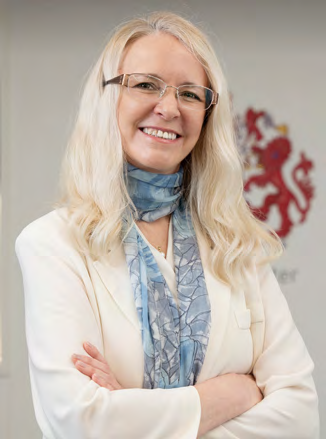
Photo: CSP
About Dr. Tatiana Schmollack-Tarasova:
Dr. Tatiana Schmollack-Tarasova is the Managing Director, BSI Greater China. Tatiana took this role since April 3, 2024. She is looking forward to supporting Chinese clients to accelerate their growth ambitions. Tatiana is responsible for the overall organization and business growth, alliance and partnership development, and government relationship management in Greater China region.
She has been in the Testing, Inspection and Certification industry for more than 18 years and has rich experience in supporting multinational companies to achieve their global growth ambitions through implementing international standards. Having worked in leadership positions in Japan, Germany, the Netherlands, the U.K. and most recently China, Tatiana has accumulated knowledge and best practices in multicultural business relationships supporting perse teams to thrive.
She joined BSI in 2018 and since then has stepped up from the EMEA Key Account Director to the Managing Director of Northern Europe and currently Managing Director of Greater China. Her focus is operationalizing and delivering BSI value in the local markets. She continues supporting large corporates to solve most complex and multi-scheme certification challenges. Tatiana is passionate about delivering value to BSI clients by providing best in class expertise and client-centric service.
